
Choosing fonts for healthcare branding is not a stylistic afterthought. It is a clinical decision wrapped in a design problem. The wrong typeface can make a dosage instruction misread, a clinic feel cold, or a wellness brand look untrustworthy. The right one builds confidence before a single word is consciously processed.
This guide gives designers a decision framework, not just a list. We will cover the criteria that actually matter, the typefaces that consistently perform, and the ones that quietly sabotage healthcare projects.
Why Typography Hits Differently in Healthcare
Healthcare audiences are rarely in a neutral state. Patients are anxious, tired, often older, sometimes visually impaired, and frequently reading on a phone in a waiting room. Practitioners are scanning quickly. Caregivers are stressed.
Your typeface has three jobs in this context:
- Legibility under pressure: readable at small sizes, on poor screens, in low light, and by aging eyes.
- Trust signaling: communicating competence, hygiene, and stability without sterility.
- Tone calibration: matching the brand position, whether it is a hospital network, a pediatric clinic, or a yoga-adjacent wellness studio.

The Decision Framework: Five Filters Before You Pick a Font
1. Define the Healthcare Sub-Vertical
“Healthcare” is not one category. A surgical hospital, a pediatric dentist, a mental wellness app, and a medical device manufacturer should not share the same typographic voice.
| Sub-vertical | Tone target | Typographic direction |
|---|---|---|
| Hospital, surgery, oncology | Authoritative, stable | Humanist sans or modern serif |
| Pediatrics, family clinic | Warm, approachable | Rounded sans, soft humanist |
| Mental health, therapy | Calm, human, non-clinical | Soft serif or low-contrast sans |
| Medtech, biotech, devices | Precise, innovative | Geometric or neo-grotesque sans |
| Wellness, spa, holistic | Premium, serene | Editorial serif paired with airy sans |
| Pharma, regulated content | Neutral, compliant | Highly legible neutral sans |
2. Audit Legibility at Real Conditions
Test the typeface where it will actually live, not in a Figma artboard at 200%.
- 14 px body text on a budget Android screen
- 10 pt printed disclaimer on coated paper
- Signage at 5 meters
- Patient form filled in by someone over 65
Look specifically at letter disambiguation: I, l, 1, 0, O, rn vs m. In medical contexts, confusing a 0 for an O on a dosage card is a real-world risk.
3. Check Accessibility Compliance
WCAG 2.2 is the floor, not the ceiling. For healthcare, target:
- Body copy never below 16 px on web
- Contrast ratio of 4.5:1 minimum, 7:1 preferred for primary content
- Generous x-height (open apertures help dyslexic readers)
- Clear differentiation of similar glyphs
- A genuine italic, not a slanted roman, for emphasis in long-form content
4. Confirm Licensing for the Full Use Case
Healthcare brands rarely live in one place. Check that licensing covers web, app, signage, packaging (often regulated), patient-facing print, and embedded use in medical software. Many display fonts that look great in a moodboard fail this test.
5. Stress-Test the Pairing
You usually need two voices: a structural one for headlines and an enduring one for body. Avoid pairing two fonts with similar personalities. The contrast should be intentional.
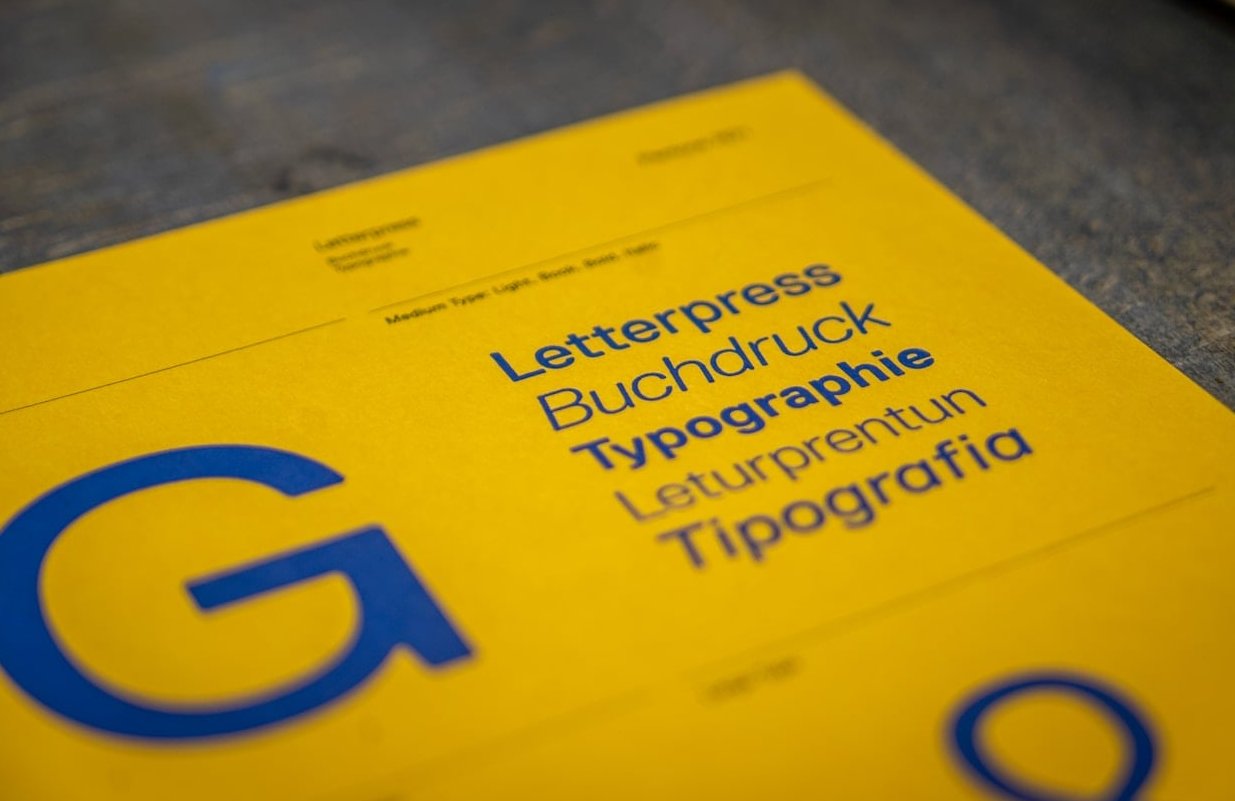
Recommended Fonts for Healthcare Branding in 2026
Reliable Workhorses (Free or Open Source)
- Inter: arguably the strongest neutral sans for healthcare interfaces. Excellent legibility, complete numeric set, mature variable version.
- Source Sans 3: humanist, calm, very readable in long-form clinical content.
- IBM Plex Sans and Plex Serif: gives serious, slightly technical authority. Strong pairing for medtech.
- Public Sans: built for government accessibility standards, transfers perfectly to regulated healthcare.
- Lora: a balanced serif with calligraphic roots. Pleasant for mental health and wellness body copy.
- Nunito: rounded sans that softens pediatric and family-care brands without becoming childish.
Premium Options Worth the Budget
- Söhne (Klim): clinical clarity with character. Used by several modern health platforms.
- GT America (Grilli Type): wide range, ideal for hospital systems needing both editorial warmth and signage strength.
- Untitled Sans (Klim): neutral but human, excellent for medtech and digital health.
- Tiempos Text (Klim): a modern serif that reads as competent and warm, great for thought leadership content from clinics.
- Söehne Breit or Inter Display: for editorial headlines without breaking accessibility.
Pairing Examples That Work
| Brand type | Headline | Body |
|---|---|---|
| Hospital network | Tiempos Headline | Inter |
| Mental wellness app | Lora | Source Sans 3 |
| Pediatric clinic | Nunito Bold | Nunito Regular |
| Medtech startup | IBM Plex Sans | IBM Plex Serif |
| Premium wellness | GT Super Display | Untitled Sans |
Why Some Fonts Fail in Healthcare Contexts
Most lists tell you what to use. Few explain what to avoid and why. Here is where designers regularly misstep:
Overused Geometric Sans (Montserrat, Poppins)
They appear constantly in healthcare templates because they are free and friendly. The problem: their perfectly circular o, e, and c create poor legibility at small body sizes, and their ubiquity strips any brand differentiation. A clinic running Montserrat looks like every other clinic running Montserrat.
Futuristic Display Fonts
Some lists recommend typefaces like Ethnocentric or Nebula for healthcare. Avoid this for any patient-facing brand. They read as gaming, sci-fi, or tech bro, not care. They might fit a niche corner of medical robotics, nothing more.
Condensed Sans for Body Copy
Condensed forms reduce horizontal space but destroy readability for older or visually impaired patients. Use them sparingly in headlines only.
Handwritten or Script Fonts
Tempting for wellness brands seeking warmth. Risky because they undermine perceived professionalism and fail accessibility. If you must use one, restrict it to a single brand mark, never to functional content.
Default System Stacks Without Curation
Letting a healthcare site fall back to Arial or Times New Roman is not neutral, it signals neglect. A defined, licensed system stack is part of the brand.

A Practical Checklist Before You Ship
- Tested at 14 px on a low-end mobile device
- Verified contrast and accessibility against WCAG 2.2
- Glyph disambiguation reviewed (0/O, 1/l/I, rn/m)
- Italic and bold weights are genuine, not synthetic
- Numerals are tabular where needed (forms, dosages, pricing)
- Licensing covers web, app, print, signage, and embedded use
- Performance budget respected (variable fonts preferred)
- Brand guideline documents the type system, not just the logo
FAQ
What is the most readable font for medical websites?
Inter, Source Sans 3, and IBM Plex Sans consistently outperform in usability testing on healthcare interfaces because of their open apertures, generous x-height, and clear glyph differentiation.
Should healthcare brands use serif or sans-serif fonts?
Sans-serif is the safer default for digital interfaces and signage. Serifs work beautifully for editorial content, premium wellness, and brands wanting a more human or established tone. The strongest healthcare systems often pair both.
Are Google Fonts good enough for a healthcare brand?
Yes, several Google Fonts are production-ready for healthcare, including Inter, Source Sans 3, IBM Plex, Public Sans, and Lora. The risk is using overexposed choices like Montserrat or Poppins that erase differentiation.
How many fonts should a healthcare brand use?
Two is the sweet spot: one for display and one for body. A third can be added for monospace data or numeric content if the brand handles a lot of clinical figures.
What font size should healthcare websites use for body text?
Minimum 16 px on web, ideally 17 to 18 px for primary content, with line-height around 1.5 to 1.6. Patient-facing print should not go below 10 pt and should prefer 11 to 12 pt.
Which fonts should I avoid for a clinic or hospital?
Avoid futuristic display fonts, decorative scripts for body copy, condensed sans for paragraphs, and overexposed geometric sans like Montserrat or Poppins if differentiation matters to the brand.